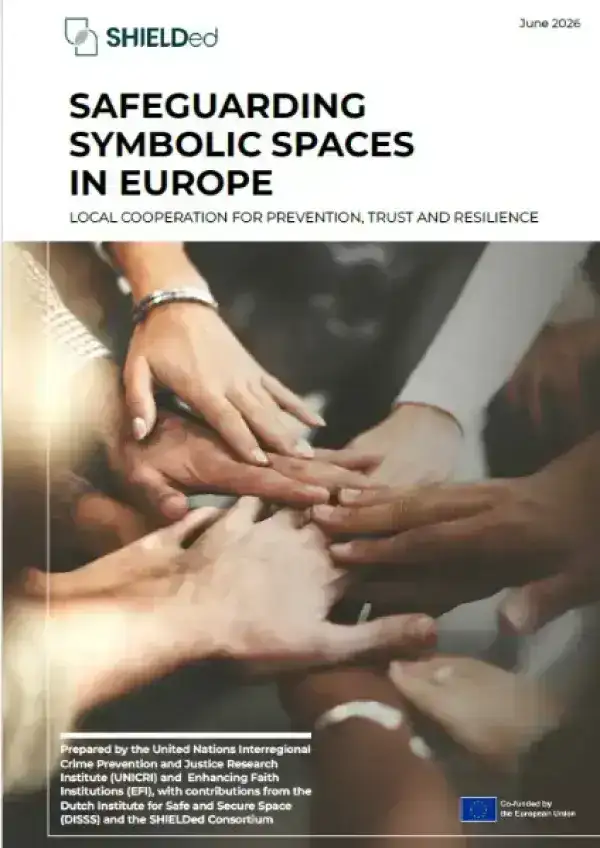

Safeguarding Symbolic Spaces In Europe
21 Sep 2026
Local Cooperation for Prevention, Trust and Resilience
UNICRI’s publications offer insights from cutting-edge research, tailored to global and context-specific needs, providing evidence-based analysis to inform policymaking and build advanced capacities.
Addressing topics such as violent extremism, organised crime, cybersecurity, CBRN risk mitigation, artificial intelligence, environmental crimes, gender issues, disinformation, illicit financial flows, and justice reform, these studies foster collaboration and advance sustainable solutions for peace, equality, and development. Explore our collection to stay informed and inspired.
Through our publications, we aim to deepen knowledge, foster collaboration, and drive forward sustainable solutions that promote justice, peace, security, accountability, equality, and development. Whether you are a policymaker, researcher, or practitioner, UNICRI’s publications serve as a trusted resource to inspire informed action and meaningful impact. Explore our collection to stay at the forefront of global and local security challenges.
21 Sep 2026
01 Sep 2026
The first edition of the Crime & Justice Quarterly reviews crime and justice developments during the first half of 2026 (January–June), drawing on threat assessments and indices published by international organizations, specialized agencies, think tanks and investigative networks.
20 Aug 2026
The use of the Internet and online ecosystems by terrorist and violent extremist actors has become increasingly complex, intersecting with a broad range of harmful narratives, violent content and online subcultures. These risks are compounded by limited content moderation capacities, systemic gaps in awareness of what constitutes harmful and unlawful content, linguistic and cultural challenges, and weaker partnerships between governments, civil society and information and communication technology companies.
06 Aug 2026
This guidance document presents a practical framework for designing, implementing, and sustaining a preventative approach to crime.
28 Jul 2026
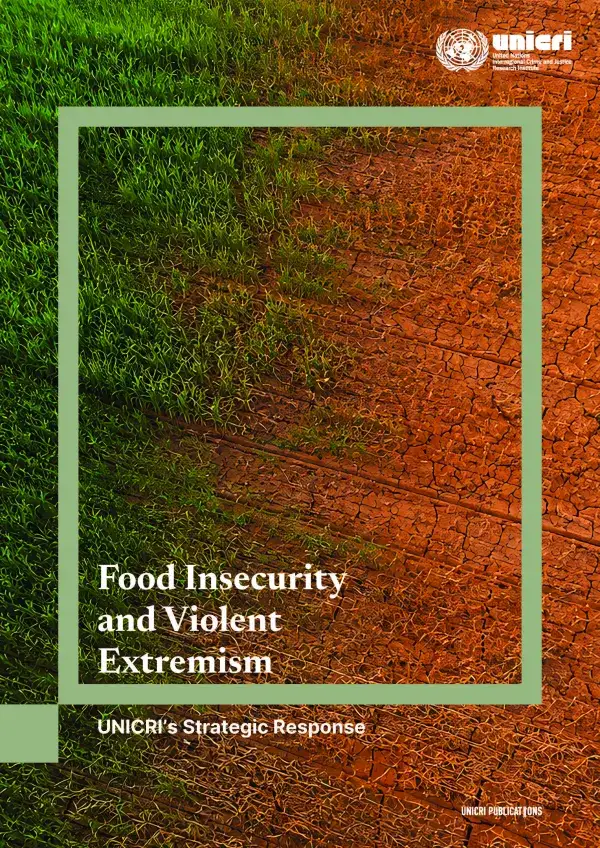
Food insecurity and violent extremism are among the defining challenges affecting peace, security and sustainable development in many regions of the world. While there is no direct causal relationship between the two, food insecurity can, in certain contexts, exacerbate grievances and vulnerabilities that violent extremist groups exploit for recruitment, influence and territorial control.
21 Sep 2026
01 Sep 2026
The first edition of the Crime & Justice Quarterly reviews crime and justice developments during the first half of 2026 (January–June), drawing on threat assessments and indices published by international organizations, specialized agencies, think tanks and investigative networks.
20 Aug 2026
The use of the Internet and online ecosystems by terrorist and violent extremist actors has become increasingly complex, intersecting with a broad range of harmful narratives, violent content and online subcultures. These risks are compounded by limited content moderation capacities, systemic gaps in awareness of what constitutes harmful and unlawful content, linguistic and cultural challenges, and weaker partnerships between governments, civil society and information and communication technology companies.
06 Aug 2026
This guidance document presents a practical framework for designing, implementing, and sustaining a preventative approach to crime.
28 Jul 2026
Food insecurity and violent extremism are among the defining challenges affecting peace, security and sustainable development in many regions of the world. While there is no direct causal relationship between the two, food insecurity can, in certain contexts, exacerbate grievances and vulnerabilities that violent extremist groups exploit for recruitment, influence and territorial control.
21 Sep 2026
01 Sep 2026
The first edition of the Crime & Justice Quarterly reviews crime and justice developments during the first half of 2026 (January–June), drawing on threat assessments and indices published by international organizations, specialized agencies, think tanks and investigative networks.
20 Aug 2026
The use of the Internet and online ecosystems by terrorist and violent extremist actors has become increasingly complex, intersecting with a broad range of harmful narratives, violent content and online subcultures. These risks are compounded by limited content moderation capacities, systemic gaps in awareness of what constitutes harmful and unlawful content, linguistic and cultural challenges, and weaker partnerships between governments, civil society and information and communication technology companies.
06 Aug 2026
This guidance document presents a practical framework for designing, implementing, and sustaining a preventative approach to crime.
28 Jul 2026
Food insecurity and violent extremism are among the defining challenges affecting peace, security and sustainable development in many regions of the world. While there is no direct causal relationship between the two, food insecurity can, in certain contexts, exacerbate grievances and vulnerabilities that violent extremist groups exploit for recruitment, influence and territorial control.
21 Sep 2026
01 Sep 2026
The first edition of the Crime & Justice Quarterly reviews crime and justice developments during the first half of 2026 (January–June), drawing on threat assessments and indices published by international organizations, specialized agencies, think tanks and investigative networks.
20 Aug 2026
The use of the Internet and online ecosystems by terrorist and violent extremist actors has become increasingly complex, intersecting with a broad range of harmful narratives, violent content and online subcultures. These risks are compounded by limited content moderation capacities, systemic gaps in awareness of what constitutes harmful and unlawful content, linguistic and cultural challenges, and weaker partnerships between governments, civil society and information and communication technology companies.
06 Aug 2026
This guidance document presents a practical framework for designing, implementing, and sustaining a preventative approach to crime.
28 Jul 2026
Food insecurity and violent extremism are among the defining challenges affecting peace, security and sustainable development in many regions of the world. While there is no direct causal relationship between the two, food insecurity can, in certain contexts, exacerbate grievances and vulnerabilities that violent extremist groups exploit for recruitment, influence and territorial control.
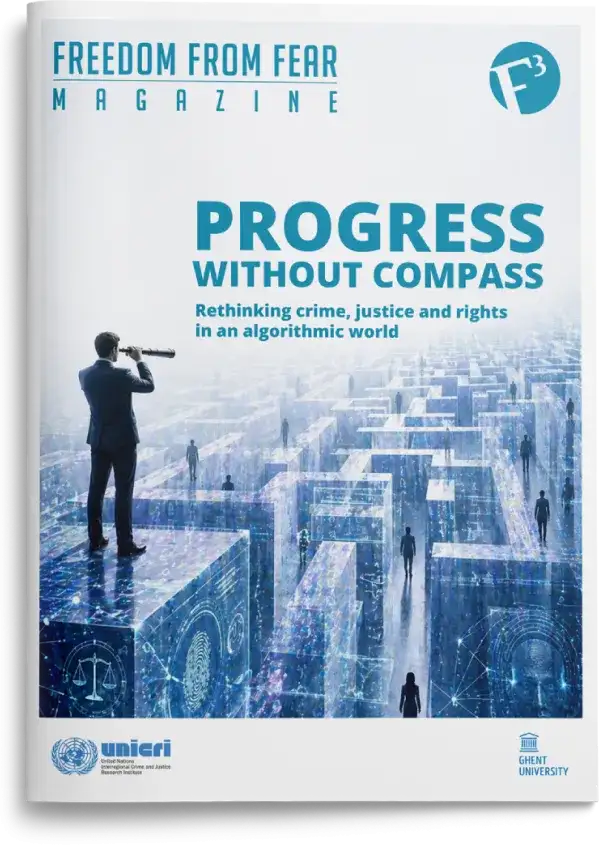
F3 advances knowledge and awareness on key global issues in justice, crime prevention, development, peace, security and human rights.
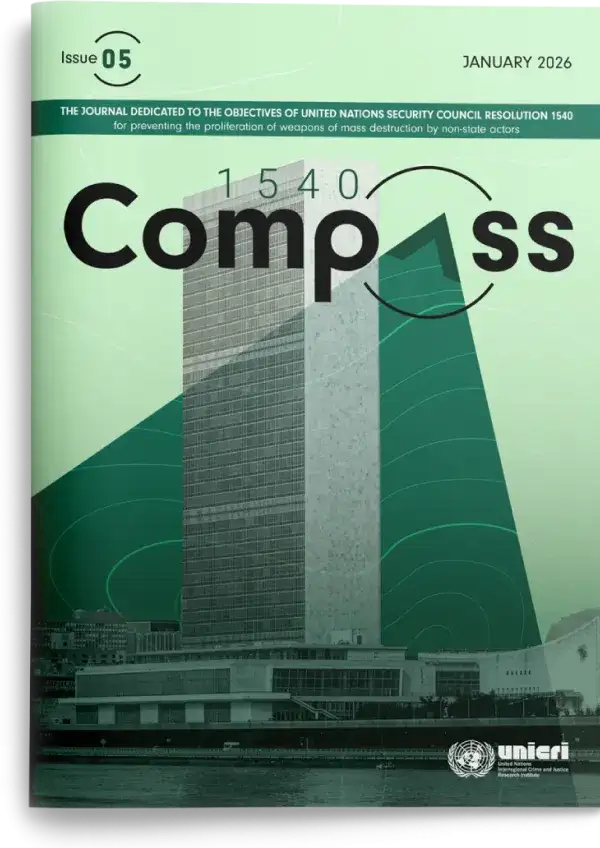
An e-journal published by UNICRI dedicated to advancing awareness and implementation of UN Security Council resolution 1540 (2004) (UNSCR 1540).