Preventative Policing in Practice: Guidance on Developing and Implementing a Crime Prevention Approach
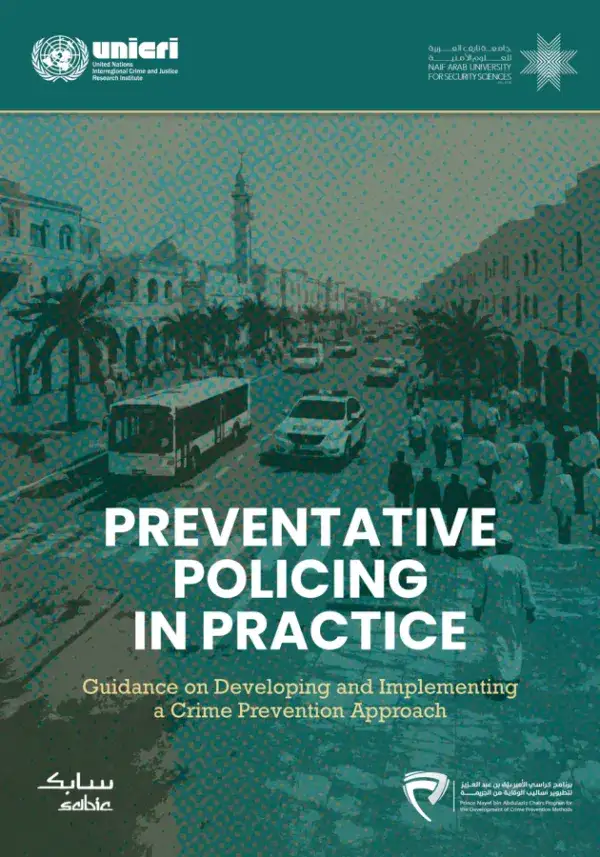
This guidance document presents a practical framework for designing, implementing, and sustaining a preventative approach to crime. Drawing on international good practices, the publication introduces six interrelated pillars of crime prevention: community engagement, intelligence, physical security, environmental design, situational problem solving, and technical solutions. It highlights the importance of tailoring these approaches to local crime patterns, risks, and social contexts.
The guidance also outlines governance arrangements at the national, regional, and local levels, emphasizing the importance of institutional coordination, professional development, community engagement and consent, and respect for human rights. Designed for policymakers, law enforcement authorities and partner organizations, the guidance offers a flexible and adaptable reference that can be applied across different legal systems, institutional capacities, and cultural contexts to strengthen sustainable crime prevention efforts.
Crime prevention is increasingly recognized as a long-term investment in public safety, trust, and social cohesion, rather than a function that can be addressed solely through reactive enforcement. A preventative approach requires alignment between strategy, institutions, professional roles, and communities, supported by clear governance and sustained capability. This guidance document combines these elements together, emphasizing how preventative policing can be structured and operationalized in practice.
Developed through a partnership between the Prince Naif bin Abdulaziz Chairs Program for the Development of Crime Prevention Methods in the Training Fields at Naif Arab University for Security Sciences (NAUSS) and the United Nations Interregional Crime and Justice Research Institute (UNICRI), this guidance document is the result of a collaborative research and consultation process. Its development was informed by a workshop hosted by NAUSS and enriched by contributions from experts and practitioners, including reviewers from the Office of the United Nations High Commissioner for Human Rights (OHCHR), the United Nations Development Programme (UNDP), and the United Nations Entity for Gender Equality and the Empowerment of Women (UN Women).