Explore our latest publications to gain insights into UNICRI’s initiatives, research, and efforts in promoting justice, crime prevention, security, and human rights worldwide.
UNICRI’s publications offer insights from cutting-edge research, tailored to global and context-specific needs, providing evidence-based analysis to inform policymaking and build advanced capacities. Addressing topics such as violent extremism, organised crime, cybersecurity, CBRN risk mitigation, artificial intelligence, environmental crimes, gender issues, disinformation, illicit financial flows, and justice reform, these studies foster collaboration and advance sustainable solutions for peace, equality, and development. Explore our collection to stay informed and inspired. Through our publications, we aim to deepen knowledge, foster collaboration, and drive forward sustainable solutions that promote justice, peace, security, accountability, equality, and development. Whether you are a policymaker, researcher, or practitioner, UNICRI’s publications serve as a trusted resource to inspire informed action and meaningful impact. Explore our collection to stay at the forefront of global and local security challenges.
Combating organised crime and Illicit Financial Flows (IFFs), and recovering illicitly-obtained assets, requires multiple policy areas and transnational cooperation. Azerbaijan’s strategic position is particularly attractive to organised criminal groups motivated to carry out smuggling operations and other illicit activity. Azerbaijan’s crime areas of priority concern include drug trafficking, human trafficking and migrant smuggling, and the smuggling of counterfeit goods.
This report is part of a series of studies launched by the European Union (EU) and UNICRI in order to shed light on the significant damage being caused to States as a result of unchecked illicit financial flows, and on the significant value of prioritising the capture of illicitly-obtained assets.
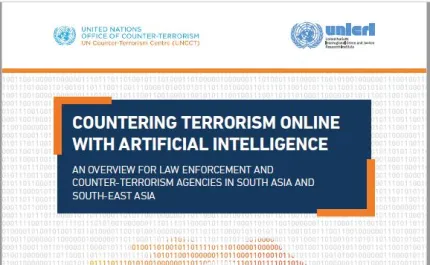
New technologies and artificial intelligence (AI) in particular, can be extremely powerful tools, enabling big advances in medicine, information and communication technologies, marketing, transportation among many other research fields. However, they can also be used for malicious purposes when falling into the wrong hands.
The integration of digital technologies into everyday life has increased at an extraordinary pace in South Asia and South-East Asia in recent years, with the use of social media by the regions’ notably young population surpassing the global average.
A spotlight on the terrorist profile(s), incitement techniques, vulnerable targets and potential impact of COVID-19.
Our society continues to be confronted with an unprecedented level of diversified, constantly evolving risks and threats to international peace and security as well as to economic development and financial integrity. The outbreak of COVID-19 has clearly, dramatically, exacerbated existing vulnerabilities.
Combating organised crime and Illicit Financial Flows (IFFs), and recovering illicitly-obtained assets, requires multiple policy areas and transnational cooperation. Azerbaijan’s strategic position is particularly attractive to organised criminal groups motivated to carry out smuggling operations and other illicit activity. Azerbaijan’s crime areas of priority concern include drug trafficking, human trafficking and migrant smuggling, and the smuggling of counterfeit goods.
This report is part of a series of studies launched by the European Union (EU) and UNICRI in order to shed light on the significant damage being caused to States as a result of unchecked illicit financial flows, and on the significant value of prioritising the capture of illicitly-obtained assets.
New technologies and artificial intelligence (AI) in particular, can be extremely powerful tools, enabling big advances in medicine, information and communication technologies, marketing, transportation among many other research fields. However, they can also be used for malicious purposes when falling into the wrong hands.
The integration of digital technologies into everyday life has increased at an extraordinary pace in South Asia and South-East Asia in recent years, with the use of social media by the regions’ notably young population surpassing the global average.
A spotlight on the terrorist profile(s), incitement techniques, vulnerable targets and potential impact of COVID-19.
Our society continues to be confronted with an unprecedented level of diversified, constantly evolving risks and threats to international peace and security as well as to economic development and financial integrity. The outbreak of COVID-19 has clearly, dramatically, exacerbated existing vulnerabilities.
Combating organised crime and Illicit Financial Flows (IFFs), and recovering illicitly-obtained assets, requires multiple policy areas and transnational cooperation. Azerbaijan’s strategic position is particularly attractive to organised criminal groups motivated to carry out smuggling operations and other illicit activity. Azerbaijan’s crime areas of priority concern include drug trafficking, human trafficking and migrant smuggling, and the smuggling of counterfeit goods.
This report is part of a series of studies launched by the European Union (EU) and UNICRI in order to shed light on the significant damage being caused to States as a result of unchecked illicit financial flows, and on the significant value of prioritising the capture of illicitly-obtained assets.
New technologies and artificial intelligence (AI) in particular, can be extremely powerful tools, enabling big advances in medicine, information and communication technologies, marketing, transportation among many other research fields. However, they can also be used for malicious purposes when falling into the wrong hands.
The integration of digital technologies into everyday life has increased at an extraordinary pace in South Asia and South-East Asia in recent years, with the use of social media by the regions’ notably young population surpassing the global average.
A spotlight on the terrorist profile(s), incitement techniques, vulnerable targets and potential impact of COVID-19.
Our society continues to be confronted with an unprecedented level of diversified, constantly evolving risks and threats to international peace and security as well as to economic development and financial integrity. The outbreak of COVID-19 has clearly, dramatically, exacerbated existing vulnerabilities.
Combating organised crime and Illicit Financial Flows (IFFs), and recovering illicitly-obtained assets, requires multiple policy areas and transnational cooperation. Azerbaijan’s strategic position is particularly attractive to organised criminal groups motivated to carry out smuggling operations and other illicit activity. Azerbaijan’s crime areas of priority concern include drug trafficking, human trafficking and migrant smuggling, and the smuggling of counterfeit goods.
This report is part of a series of studies launched by the European Union (EU) and UNICRI in order to shed light on the significant damage being caused to States as a result of unchecked illicit financial flows, and on the significant value of prioritising the capture of illicitly-obtained assets.
New technologies and artificial intelligence (AI) in particular, can be extremely powerful tools, enabling big advances in medicine, information and communication technologies, marketing, transportation among many other research fields. However, they can also be used for malicious purposes when falling into the wrong hands.
The integration of digital technologies into everyday life has increased at an extraordinary pace in South Asia and South-East Asia in recent years, with the use of social media by the regions’ notably young population surpassing the global average.
A spotlight on the terrorist profile(s), incitement techniques, vulnerable targets and potential impact of COVID-19.
Our society continues to be confronted with an unprecedented level of diversified, constantly evolving risks and threats to international peace and security as well as to economic development and financial integrity. The outbreak of COVID-19 has clearly, dramatically, exacerbated existing vulnerabilities.
Our Magazines
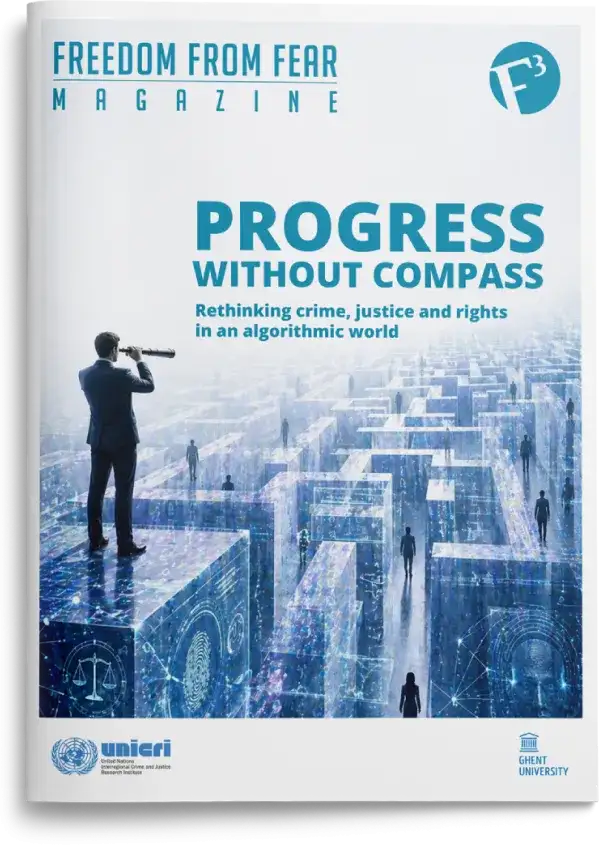
FREEDOM FROM FEAR MAGAZINE (F3)
F3 advances knowledge and awareness on key global issues in justice, crime prevention, development, peace, security and human rights.