Explore our latest publications to gain insights into UNICRI’s initiatives, research, and efforts in promoting justice, crime prevention, security, and human rights worldwide.
UNICRI’s publications offer insights from cutting-edge research, tailored to global and context-specific needs, providing evidence-based analysis to inform policymaking and build advanced capacities. Addressing topics such as violent extremism, organised crime, cybersecurity, CBRN risk mitigation, artificial intelligence, environmental crimes, gender issues, disinformation, illicit financial flows, and justice reform, these studies foster collaboration and advance sustainable solutions for peace, equality, and development. Explore our collection to stay informed and inspired. Through our publications, we aim to deepen knowledge, foster collaboration, and drive forward sustainable solutions that promote justice, peace, security, accountability, equality, and development. Whether you are a policymaker, researcher, or practitioner, UNICRI’s publications serve as a trusted resource to inspire informed action and meaningful impact. Explore our collection to stay at the forefront of global and local security challenges.
This report examines the potential benefits and risks of introducing new technologies in prisons to facilitate prisoner rehabilitation. It aims to assist policymakers, practitioners, and those responsible for the design and delivery of rehabilitative programmes to understand how to leverage technologies to support prisoner rehabilitation effectively and ethically.
The UN Interregional Crime and Justice Institute (UNICRI), as a valuable component of the UN system, is well-placed to be a key contributor to the 2030 SDG’s gender equality goals. Its mandate in crime prevention, justice, and security is grounded in the fundamental UN principles of human rights and the rule of law. This situates the principles of gender equality and women’s rights as an important part of UNICRI’s work.
The Sahel represents one of the most unstable areas in sub-Saharan Africa. Widespread violence and limited access to resources, essential services and means of subsistence contribute to increased fragility and impact the everyday life of women, girls, men, and boys. Endemic poverty, inequality – particularly gender inequality – and human rights abuses are among the multiple factors that have a strong impact on the security of the region.
Our world is increasingly digital, interconnected, and reliant on technology, and as we journey further into the 21st century, the transformative potential of digitalization becomes ever more undeniable. It touches all aspects of life, altering how we communicate, conduct business, and govern our societies. In this ever-evolving landscape, it is imperative that we strive to harness the power of digitalization to create a more just, inclusive, and sustainable future for all.
This report examines the potential benefits and risks of introducing new technologies in prisons to facilitate prisoner rehabilitation. It aims to assist policymakers, practitioners, and those responsible for the design and delivery of rehabilitative programmes to understand how to leverage technologies to support prisoner rehabilitation effectively and ethically.
The UN Interregional Crime and Justice Institute (UNICRI), as a valuable component of the UN system, is well-placed to be a key contributor to the 2030 SDG’s gender equality goals. Its mandate in crime prevention, justice, and security is grounded in the fundamental UN principles of human rights and the rule of law. This situates the principles of gender equality and women’s rights as an important part of UNICRI’s work.
The Sahel represents one of the most unstable areas in sub-Saharan Africa. Widespread violence and limited access to resources, essential services and means of subsistence contribute to increased fragility and impact the everyday life of women, girls, men, and boys. Endemic poverty, inequality – particularly gender inequality – and human rights abuses are among the multiple factors that have a strong impact on the security of the region.
Our world is increasingly digital, interconnected, and reliant on technology, and as we journey further into the 21st century, the transformative potential of digitalization becomes ever more undeniable. It touches all aspects of life, altering how we communicate, conduct business, and govern our societies. In this ever-evolving landscape, it is imperative that we strive to harness the power of digitalization to create a more just, inclusive, and sustainable future for all.
This report examines the potential benefits and risks of introducing new technologies in prisons to facilitate prisoner rehabilitation. It aims to assist policymakers, practitioners, and those responsible for the design and delivery of rehabilitative programmes to understand how to leverage technologies to support prisoner rehabilitation effectively and ethically.
The UN Interregional Crime and Justice Institute (UNICRI), as a valuable component of the UN system, is well-placed to be a key contributor to the 2030 SDG’s gender equality goals. Its mandate in crime prevention, justice, and security is grounded in the fundamental UN principles of human rights and the rule of law. This situates the principles of gender equality and women’s rights as an important part of UNICRI’s work.
The Sahel represents one of the most unstable areas in sub-Saharan Africa. Widespread violence and limited access to resources, essential services and means of subsistence contribute to increased fragility and impact the everyday life of women, girls, men, and boys. Endemic poverty, inequality – particularly gender inequality – and human rights abuses are among the multiple factors that have a strong impact on the security of the region.
Our world is increasingly digital, interconnected, and reliant on technology, and as we journey further into the 21st century, the transformative potential of digitalization becomes ever more undeniable. It touches all aspects of life, altering how we communicate, conduct business, and govern our societies. In this ever-evolving landscape, it is imperative that we strive to harness the power of digitalization to create a more just, inclusive, and sustainable future for all.
This report examines the potential benefits and risks of introducing new technologies in prisons to facilitate prisoner rehabilitation. It aims to assist policymakers, practitioners, and those responsible for the design and delivery of rehabilitative programmes to understand how to leverage technologies to support prisoner rehabilitation effectively and ethically.
The UN Interregional Crime and Justice Institute (UNICRI), as a valuable component of the UN system, is well-placed to be a key contributor to the 2030 SDG’s gender equality goals. Its mandate in crime prevention, justice, and security is grounded in the fundamental UN principles of human rights and the rule of law. This situates the principles of gender equality and women’s rights as an important part of UNICRI’s work.
The Sahel represents one of the most unstable areas in sub-Saharan Africa. Widespread violence and limited access to resources, essential services and means of subsistence contribute to increased fragility and impact the everyday life of women, girls, men, and boys. Endemic poverty, inequality – particularly gender inequality – and human rights abuses are among the multiple factors that have a strong impact on the security of the region.
Our world is increasingly digital, interconnected, and reliant on technology, and as we journey further into the 21st century, the transformative potential of digitalization becomes ever more undeniable. It touches all aspects of life, altering how we communicate, conduct business, and govern our societies. In this ever-evolving landscape, it is imperative that we strive to harness the power of digitalization to create a more just, inclusive, and sustainable future for all.
Our Magazines
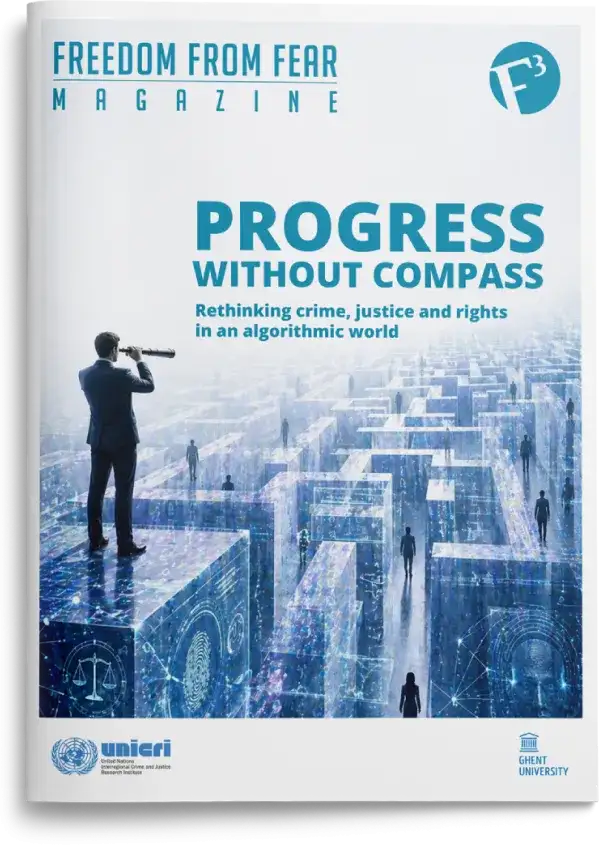
FREEDOM FROM FEAR MAGAZINE (F3)
F3 advances knowledge and awareness on key global issues in justice, crime prevention, development, peace, security and human rights.